A good corporate training programme is not defined by content volume or delivery format but by outcomes. Organisations are increasingly asking a more practical question: Does training improve performance, decision-making and business results?
Across the GCC, effective learning design for employees is shifting toward targeted, measurable and role-specific approaches. Training programmes are expected to address real workplace challenges, not just deliver theoretical knowledge.
Below are the key elements that define what makes a good corporate training programme and how organisations can apply them in practice.

What makes a good corporate training programme in practice?
A strong corporate training programme design starts with clarity. Organisations need to define what success looks like before developing content or selecting delivery formats. This means identifying:
- The skill gap: The exact difference between current and required performance.
- The business trigger: The specific organisational KPI the training is designed to move.
- The metric: The data points that will prove the programme’s effectiveness.
Without this foundation, even well-designed training can fail to deliver meaningful impact.
What are the key elements of an effective training programme?
A high-performing programme moves beyond participation to prioritise behavioural change and operational readiness. Here are the elements that serve as a bridge between a skill gap and a business result.
1. Clear alignment with business objectives
Effective corporate training begins with alignment. Training should address specific business priorities such as improving operational efficiency, strengthening leadership capability, or meeting regulatory requirements.
For example, a finance training programme may focus on improving reporting accuracy, while a leadership programme may target decision-making speed and team performance. This ensures training is directly linked to measurable outcomes.
2. Role-specific and relevant content
Relevance is one of the leading elements of an effective training programme. Generic content can reduce engagement and limit long-term retention because it fails to address the unique pressures of a specific function. Organisations now demand targeted training filtered through industry and role requirements. Whether it is technical reporting standards for finance teams or workforce analytics for HR, targeted content helps employees apply learning more effectively in their roles.
3. Practical, application-focused learning
Training is most effective when it reflects real work scenarios. Instead of focusing on theory, programmes should include case studies, simulations and problem-solving exercises.
For example, leadership training may involve handling performance reviews or managing team conflict, while customer-facing roles may practise responding to complex client situations. This ensures employees can apply what they learn immediately.
4. Structured and well-paced delivery
Good corporate training programme design considers how content is delivered, not just what is delivered. Long, unstructured sessions often reduce retention and engagement.
Effective programmes break content into manageable sections and use a mix of formats where appropriate, such as:
- Short learning modules
- Interactive sessions
- Follow-up activities
This structure supports better understanding and allows learning to fit into day-to-day work.
5. Continuous measurement and feedback
Training should not end once delivery is complete. A strong programme includes ongoing measurement to assess whether learning is improving performance. This may involve tracking changes in how employees perform their roles, how decisions are made, or how key business metrics shift over time. Continuous feedback also allows organisations to refine training and address gaps more quickly.
6. Integration with day-to-day work
Training is often more effective when closely connected to employees’ day-to-day responsibilities. Standalone learning sessions may have limited long-term impact without reinforcement and application.
- On-the-job application
- Manager-led reinforcement
- Continuous learning resources
This allows training to become part of how employees work, not an isolated activity.
How can organisations design effective corporate training programme designs?
Understanding how to design a corporate training programme requires a structured approach. Organisations need to move beyond content creation and focus on how learning supports performance.
In practice, this involves:
- Defining clear objectives linked to business outcomes
- Designing role-specific and practical content
- Selecting delivery formats that fit operational needs
- Measuring impact and adjusting programmes over time
This approach supports effective corporate training in environments where performance and adaptability are critical.
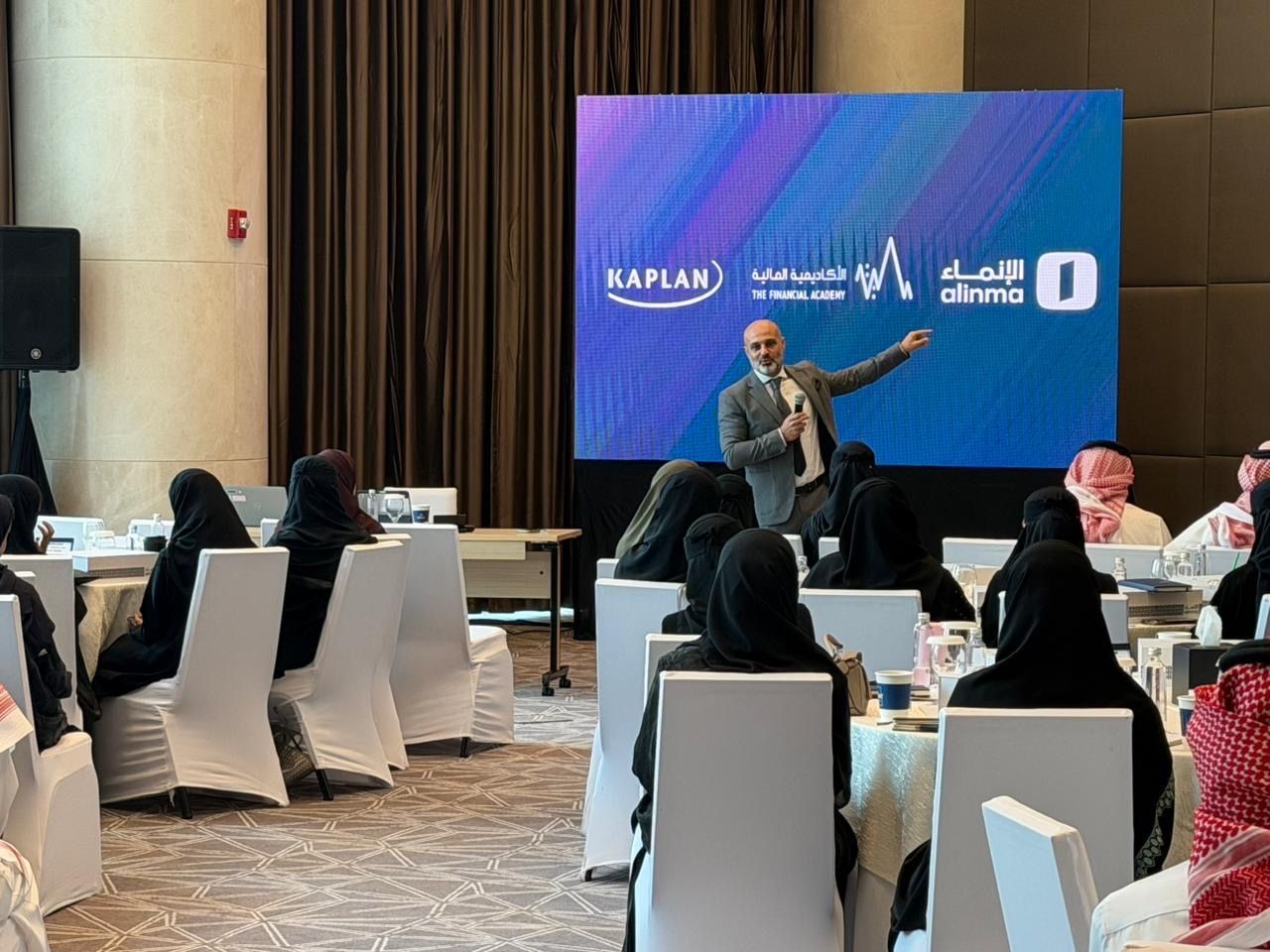

Building effective training programmes
Closing critical skill gaps requires a rigorous approach to learning design for employees. Kaplan MENA specialises in developing the frameworks that GCC firms need to maintain a competitive edge. Our programmes prioritise behavioural change across all functions, from technical finance and ESG foundations to applied leadership development. We help you move beyond volume-based training towards training models that support stronger workplace performance and role-specific capability development.
Build AI-powered learning strategies with Kaplan MENA
Kaplan MENA works with organisations to design and deliver AI-powered corporate training in the GCC. Our corporate solutions include digital programmes, finance training, leadership development, and ESG foundations, all structured to support scalable, data-driven learning strategies.
Reach out to Kaplan MENA to learn how AI and microlearning can enhance your training programmes.